The family was Jewish ...

EN | DE

The Film

First-hand experiences of Nazi persecution have come down to us in written memoirs and recorded interviews. And they live on in the memories of families, where the perspectives on them change from one generation to the next. The family was Jewish … tells the story of one family of victims and survivors from the late nineteenth century to the present.

The film retraces my growing awareness of the German-Jewish side of my family. As a child, I gradually got to know my relatives, in person and in our photo albums. Later I learned more about them from the Munich municipal archive and the Internet.

Some of our relatives survived Nazi persecution by fleeing to the U.S. There the children grew up, married, and had families of their own. Other branches of the family tree ended in the extermination camps. And there were some who committed suicide even after escaping to safety.

The sensitive technical realization of the 16½-minute film by the graphic artist Sandra Beer (Frankfurt a.M.) and the sound engineer Kathrin Dröppelmann (Berlin) was funded by the Historisches Museum Frankfurt. The film was on view there in the exhibition “The CityLab in Search of Traces Today” from December 2021 to September 2022. It is based on photos, animation, and short video sequences and has a soundtrack with narration and musical elements. It is available in German and English and can be used as a teaching aid.

The film was designed for projection in a cinema or on a screen or wall (mp4, 1920 x 1080 in 16:9).

Family Research Sources

I began research on the German-Jewish side of my family in 2004 because I wanted to find out what had become of my great-grandmother Dorline and my great-aunt Lisl. The two women had remained behind in Munich when my father’s family fled Germany in 1936. I inquired with the municipal archive in Munich and received a wealth of information about them that was new to the family.

In 2018 I learned that, in Munich, you can apply for markers to commemorate the victims of the Shoah in the form of wall plaques or steles. I decided to apply for commemorative steles for Dorline and Lisl.

Not long afterward, I received an invitation from the Historisches Museum Frankfurt to take part in a participatory exhibition called “The CityLab in Search of Traces Today.” I accepted and began preparing a presentation on my German-Jewish family history from today’s perspective. Now I was working on that project—the film on view here—and the applications for the commemorative markers simultaneously. In the course of my research, I realized that other relatives may also have been murdered by the Nazis.

In the Biographical Memorial Book of the Munich Jews 1933–1945 and the Online Memorial Book of the Augsburg Memory Workshop, I learned of several further victims. I contacted the Stolpersteine Initiative for Augsburg and Environs to apply for commemorative markers in Augsburg as well. I received additional information from the Arolsen Archives—International Center on Nazi Persecution, the Facebook page of the Leo Baeck Institute in New York, the Memorial Book of the German Federal Archive, and the General Register Office of the United Kingdom.

Reflection

In her moving family chronicle, Judy Rosenthal introduces—among others—victims of National Socialism as members of her family, as beloved, sorely missed persons, along with their stories. In a special form of first-hand testimony, family histories of this kind can bring individual fates back out of oblivion and make us aware of them in the present as a part of our common past.

Prof. Dr. em. Ludger van Gisteren
University Professor of Medical Psychology,
Clinical Psychology, and Psychotherapy
Brandenburg Medical School Theodor Fontane

EN | DE

In Dialogue

More than eighty years after the end of World War II, the history of National Socialism and the Holocaust is as relevant as ever. Its impact on German society as a whole and on virtually every family whose ancestors lived in Germany at that time is still strong today. Every German school pupil of the present learns about it.

Since making my film, I have sought to engage with my fellow members of Germany society in reflection and dialogue about that history.

Two German Family Histories: Research on the Nazi Period and Its Aftereffects

An offer for adults / A further-training offer for teachers (both in German)

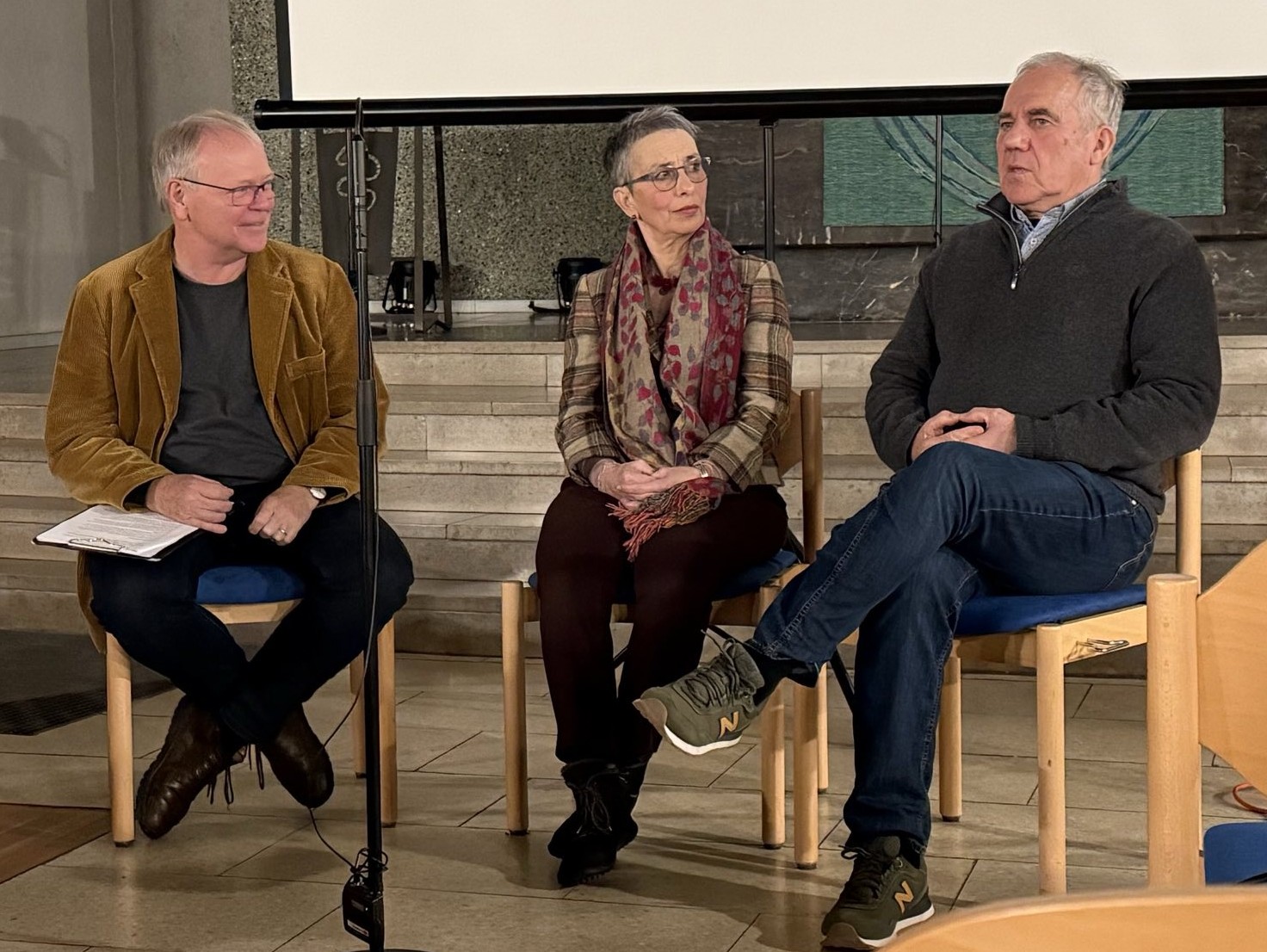
This format offers adults of all generations an opportunity to look at the Nazi period through the lens of two very different German family histories. My partners in this project are Frank Paulun and Gottfried Kössler. Frank Paulun is a retired social worker who directed a home for the homeless and ex-convicts. Gottfried Kössler is a Holocaust memorial educator and former deputy director of the Fritz Bauer Institute in Frankfurt am Main.

After a showing of the film The family was Jewish …, Frank Paulun presents the results of his research, which began with his discovery of old family photos and documents. These he supplemented with a wealth of information he obtained from various archives. He learned that, during the Nazi period, his grandfather—a policeman in the town of Wuppertal—had been a member of a police battalion that had been stationed and committed crimes in various countries of Eastern Europe.

However different our stories, they have led Frank Paulun and me to a deeper understanding and conviction of how important it is to take a stand for democracy, human rights, truth, and a free and open society.

Following the two presentations, Gottfried Kössler opens and moderates a question and discussion session with the audience.

We carry out this event in organizations such as churches, adult education institutions, and neighborhood centers in Germany. As a further-training format, we offer it to history, religion, ethics, and politics teachers.

Further information and inquiries

Veranstaltung in der neuen Nicolaigemeinde, Frankfurt Im Gespräch zu sehen sind v. l. n. r.: Gottfried Kößler, Judy Rosenthal, Frank Paulun Herr Paulun spricht, während Frau Rosenthal und Herr Kößler im zugewandt zuhören.
l to r.: Gottfried Kössler, Judy Rosenthal, Frank Paulun | New St. Nicholas Church, Frankfurt a.M.

The Film The family was Jewish …: Learning about History through Biographies

An online teaching module (in German)

Developed by the Fritz Bauer Institute in Frankfurt am Main, this teaching module takes the autobiographical documentary The family was Jewish … as a starting point for learning about the Holocaust and reflecting on how it is remembered in families and in society.

The film raises a range of questions about the history and situations of the family members both in exile and in Nazi Germany. Students can find answers to these questions in the biographical and informational texts, photos, documents, and glossary comprised by the module.

The module is designed for instruction in history, politics, social studies, ethics, and religion in grades 9 to 13.

It addresses the challenges teachers face with regard to learners’ social diversity and different learning levels. Particular attention was paid to developing teaching material for students who may have neither prior knowledge nor a family history related to National Socialism.

Timeframe: 4 periods (à 45 minutes)
Author: Ann-Kathrin Rahlwes on behalf of the Fritz Bauer Institute, Frankfurt am Main
Link to the teaching module (in German)
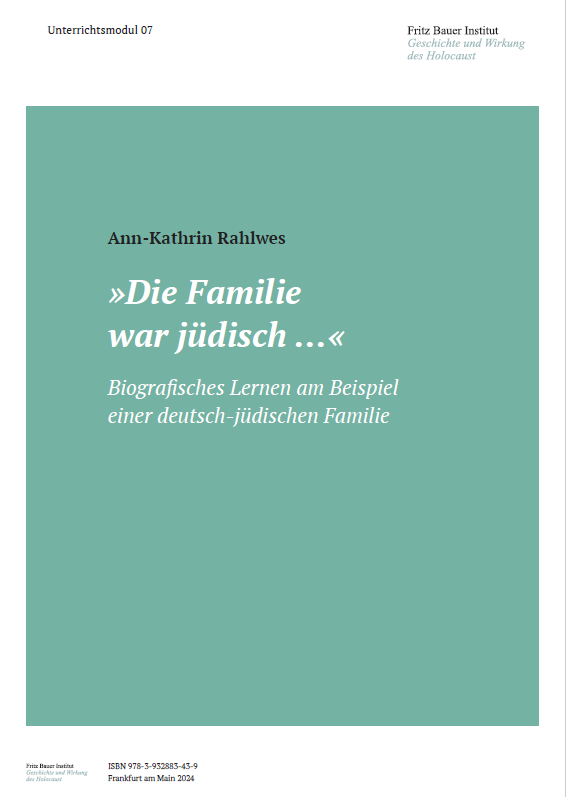
Deckblatt Unterrichtsmodul "Die Familie war jüdisch..." - Biografisches Lernen am Beispiel einer jüdischen Familie

Film and Talk with Second-Generation Survivor Judy Rosenthal

An offer for school groups (in German or English)

The short film The family was Jewish … lends itself well to use as a teaching aid for school instruction in history, politics, social studies, religion, and ethics. I offer two formats for visiting schools and talking to classes in grades 9 to 13 about the film and the history of the Holocaust:

Format 1: The students and I watch the film together and then talk about the questions that have come up for them while watching. (Also suitable for German and English* classes.)
Duration: approx. 90 minutes

*For use in English class, we can watch the English version of the film and conduct the conversation in English.

Format 2: The class is already familiar with the film from having worked with the teaching module “Die Familie war jüdisch …: Biografisches Lernen am Beispiel einer deutsch-jüdischen Familie.” During my visit, we discuss their questions, impressions, and interests.
Duration: approx. 60–90 minutes

Further information and inquiries

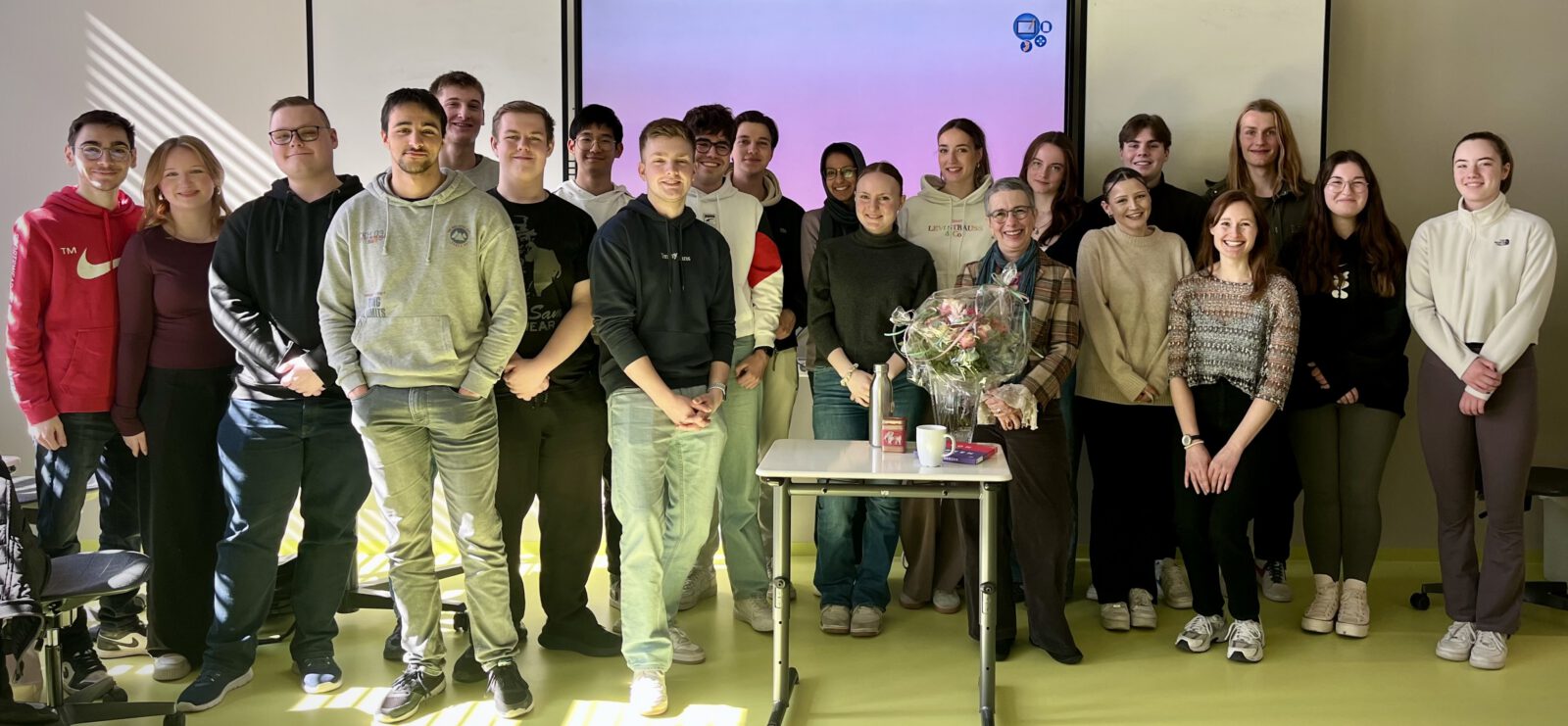
Gruppenfoto nach dem Zweitzeugengespräch mit einer 13. Klasse an der IGS-Stierstadt
Visit to a 13th-grade advanced-placement history class at the IGS-Stierstadt in Oberursel, Germany

EN | DE

Who I am

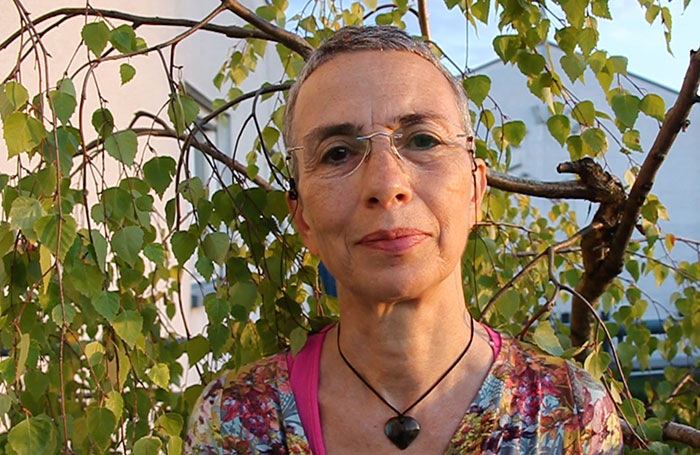
I, Judy Rosenthal, was born in Chicago in 1957 and grew up there. Whereas my mother’s family had been in the U.S. and Canada for a few generations already, my father and his parents and brother—German Jews—had immigrated to the States from Germany in 1936 to flee Nazi persecution.

I studied art history, German, and English in St. Louis and New York. After graduating from college, I had an opportunity to live in Munich—coincidentally, the city my father had come from. I decided to spend one or two years there and get to know Munich, Germany, and Europe.

I still live in Germany today and am meanwhile a proud resident of Frankfurt am Main. I am a dual citizen of the U.S. and Germany, mother of two, and grandmother of one. I work as a free-lance translator (German to English) specializing in art and the history of National Socialism.
EN | DE

Links

Content available in German only is marked accordingly.

Eva-Lena Lörzer, “Was wirklich mit Lisl geschah”TAZ, 06/15/2025 (in German)

Norbert Joa interviews Judy Rosenthal, Übersetzerin: “Eine echte Aufarbeitung der NS-Zeit ist nie erfolgt!”, BR-Podcast “Eins zu Eins: Der Talk,” broadcast 11/25/2025 (in German)

One on One—The Talk on Bayern 2 with Judy Rosenthal, broadcast 11/25/2025, English transcript

Online teaching module for the film The family was Jewish …: »Die Familie war jüdisch …« Biografisches Lernen am Beispiel einer deutsch-jüdischen Familie (in German)

The Film The family was Jewish …: Learning about History through Biographies
English description of the German teaching module

Dialogue with school groups:  Film and Talk with Second-Generation Survivor Judy Rosenthal

Reflections on the Holocaust and how it is remembered:
Two German Family Histories: Research on the Nazi Period and Its Aftereffects 

Articles about “Two German Family Histories”:
Erschütternde Erkenntnisse über eine fürchterliche Vergangenheit gewonnen von Katja Weinig, Taunus Zeitung, 11.11.2024 (in German)

Was hast du eigentlich damals gemacht? – Zwei deutsche Familiengeschichten von Heike Röhl, Blog – St. Angela-Schule Königstein im Taunus, 13.11.2024 (in German)

The search for original works by Elisabeth Springer: Lost Art Database: Elisabeth Springer

Web page on the artist and actress Elisabeth Springer: Lost Women Art: Elisabeth Springer

Article by Judy Rosenthal on Elisabeth Springer’s home in Munich: Das Haus Rosental 19: Das Zuhause der Künstlerin Elisabeth Springer (in German)

Article by Susanna Partsch on the Munich art school Elisabeth Springer attended: Die städtische Malschule an der Westenriederstraße. Ausbildungsstätte für zahlreiche Künstler*innen (in German)

The Frankfurt Historical Museum’s CityLab: Frankfurters are the experts on their city

In Search of Traces,” an example of a Frankfurt Historical Museum CityLab project (in German)

DenkMalAmOrt: Remembering victims of Nazi persecution where they lived, studied, and worked. An annual grassroots remembrance initiative in a growing number of German cities

Mission statement of Frankfurt’s Fritz Bauer Institute for study, research and documentation of the mass crimes committed under National Socialism

Gottfried Kößler, “Würde und Scham: Der Gegenstand des Lernens über den Holocaust vor dem Hintergrund der geschichtswissenschaftlichen Forschung,” Einsicht. Bulletin des Fritz Bauer Instituts 04, Fall 2010, pp. 22–27 (in German)

Monique Eckmann and Gottfried Kößler, “Pädagogische Auseinandersetzung mit aktuellen Formen des Antisemitismus Qualitätsmerkmale und Spannungsfelder mit Schwerpunkt auf israelbezogenem und sekundärem Antisemitismus,” discussion paper, Deutsches Jugendinstitut, Geneva and Frankfurt am Main, January 2020 (in German)

Report on Frank Paulun’s research: Martin Schmitz-Kuhl, “Spuren suchen,” Schneekugel, Fall-Winter 2021/2022, no. 2, pp. 24–27 (in German)

Susanna Partsch: Art historian, Munich, expert on the Munich artist Elisabeth Springer (1904-1941) (in German)

Ann-Kathrin Rahlwes: Historian, Frankfurt a.M. (in German)

Eva-Lena Lörzer: Journalist, writer, copywriter, Berlin (in German)

Sarah Rosenthal: Poet, writer, filmmaker, San Francisco

Julius and John Rosenthal and Rosenthal Art Slides: A German-Jewish attorney creates a new livelihood for himself and his family in Chicago after fleeing Nazi persecution (abstract)

Article by Judy Rosenthal on the film Nathan the Wise (1922) as an early victim of National Socialism: Die Regina-Lichtspiele. Der Film “Nathan der Weise” (1922) als frühes Opfer des Nationalsozialismus (in German)

EN | DE

Contact

If you have any questions or thoughts about this project, I would be glad to hear from you. Please use this form to contact me: